

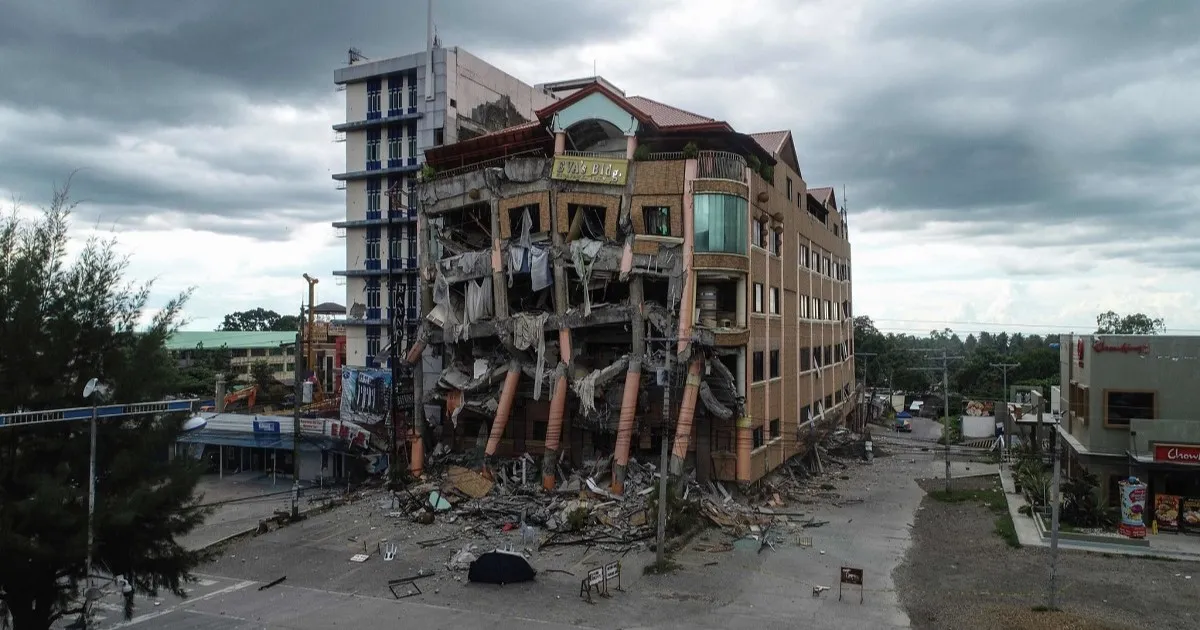
Fifty-three cadavers were retrieved by emergency units in the aftermath of the devastating 7.8-magnitude earthquake off Sarangani. The Bureau of Fire Protection (BFP) confirmed the grim milestone on Thursday, June 11, noting that the identities of the victims were still undergoing validation. This figure officially surpasses the forty-five fatalities previously released by the national disaster risk reduction agency, i.e., the NDRRMC, as of midday Wednesday.
 Copy link


If local government units fail to establish secure safe zones, the massive displacement of thousands across Mindanao would result to a severe humanitarian crisis. Response operations spanning Wednesday to Thursday revealed the extent of the devastation, with more than two thousand two hundred twenty-three aftershocks ranging from magnitude 1.2 to 6.4 recorded by PHIVOLCS. Consequently, six thousand nine hundred ninety-five individuals were forced into temporary evacuation centers. In order to help affected households cope up with the disaster, a contingent of emergency responders from Caraga, Region 10 and the Bangsamoro region are augmenting local units in Region 12. Prior to the inter-regional deployment, the agency placed BFP Regions 11 and 12 under Code Red Alert, putting three thousand four hundred forty-one personnel on full alert for humanitarian, rescue and evacuation operations.
President Ferdinand Marcos Jr. personally inspected the devastation in General Santos City and directed health authorities to prioritize medical responses in the affected provinces. The Philippine president stressed that damaged facilities must be evaluated immediately to restore essential government services. Acting on the mandate to ensure consumer protection, the Department of Trade and Industry imposed a 60-day price freeze on basic necessities. Trade Secretary Cristina Roque assured the public that the department is actively monitoring the prices of crucial commodities, e.g., canned goods, water and medicines, to prevent local suppliers from exploiting the calamity. Additionally, financial assistance would be extended to micro, small and medium enterprises through the Enterprise Rehabilitation Fund.
Furthermore, the Department of Health and the local government of Malungon, Sarangani guaranteed that victims injured by fallen trees or collapsed furnitures would not pay hospital bills. Health Secretary Ted Herbosa visited the Malungon Provincial Hospital to check on patients, coordinate regional health initiatives and assess the structural damages of the facility. Meanwhile, the Department of Labor and Employment directed the Occupational Safety and Health Center to form a specialized rescue team that would be trained and deployed to high-risk emergency zones.
Unless comprehensive structural assessments are regularly conducted by schools, commercial establishments and private homeowners, authorities warn that subsequent aftershocks could cause further casualties. BFP Chief Arroyo similarly reminded the public to organize regular evacuation drills and prepare emergency go-bags equipped with first-aid items, water and food rations that could last for at least three days.