

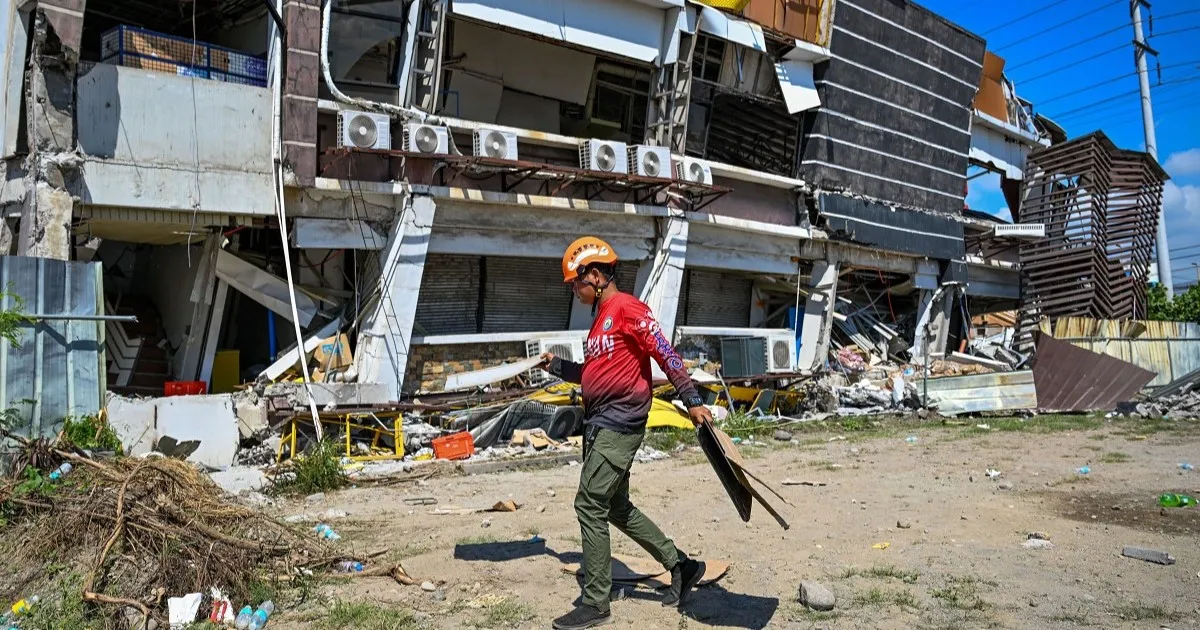
A magnitude 7.8 earthquake struck Mindanao on Tuesday, and the Office of Civil Defense announced that stricter implementation of the National Building Code would be prioritized to help the region cope up with future calamities.
 Copy link


Narito ang mga winning combination para sa 4D Lotto, Mega Lotto 6/45 at Grand Lotto 6/55 para sa araw ng Miyerkoles, Disyembre 17, 2025, base sa 9 p.m. draw ng Philippine Charity Sweepstakes Office (PCSO).
Although the immediate focus remains on emergency response, long-term rehabilitation must address critical facilities if the country expects to prevent tragedies that result to widespread destruction. Junie Castillo, OCD spokesperson, stated that the rehabilitation of public infrastructures, commercial centers and schools would be strictly monitored by the agency.
"When it comes to long-term plans and long-term solutions, first is the recovery and rehabilitation of infrastructure, especially critical facilities. Those should be planned for, repaired and funded," Castillo explained.
Questions regarding compliance were raised after footages from General Santos City and Sarangani showed structural failures.
"With the structural code, what is stated there is that it could withstand a magnitude 8 earthquake, so that is where we need to catch up in implementation," he added.
It was observed that heavy equipments and furnitures inside critical facilities were destroyed, indicating potential violations. If local building officials failed to enforce the structural code, strict measures would be taken against them.
Extensive damage assessments were conducted across Region 9, Region 11, Region 12 and the Bangsamoro region. As of 11 a.m. Tuesday, the agency reported that forty-seven infrastructure facilities were damaged, while two thousand five hundred five houses sustained varying degrees of destruction. The calamity resulted to the displacement of thirty-two thousand nine hundred twenty-six families, or approximately one hundred forty-five thousand people, across one hundred sixty-three barangays.
Currently, eight thousand seven hundred twenty-five families are staying inside fifty-four evacuation centers, while one thousand eight hundred four families remain outside.
Relief operations are being managed by the Department of Social Welfare and Development, the Department of Health and local government units. To address the crisis, the department distributed two thousand forty-five family food packs weighing 5kg, two thousand seven hundred five ready-to-eat meals and over three hundred non-food items, e.g., sleeping kits. The cost of humanitarian assistance has reached over four million pesos.
Meanwhile, medical tents were erected outside hospitals, and patients were moved safely as authorities dealt with power outages and aftershocks. Castillo assured the public that generator sets and fuel supplies would be delivered continuously from Wednesday to Friday, ensuring that medical facilities can operate effectively. Local government units and regional offices lead the ongoing response, with national agencies remaining on standby for augmentation.