


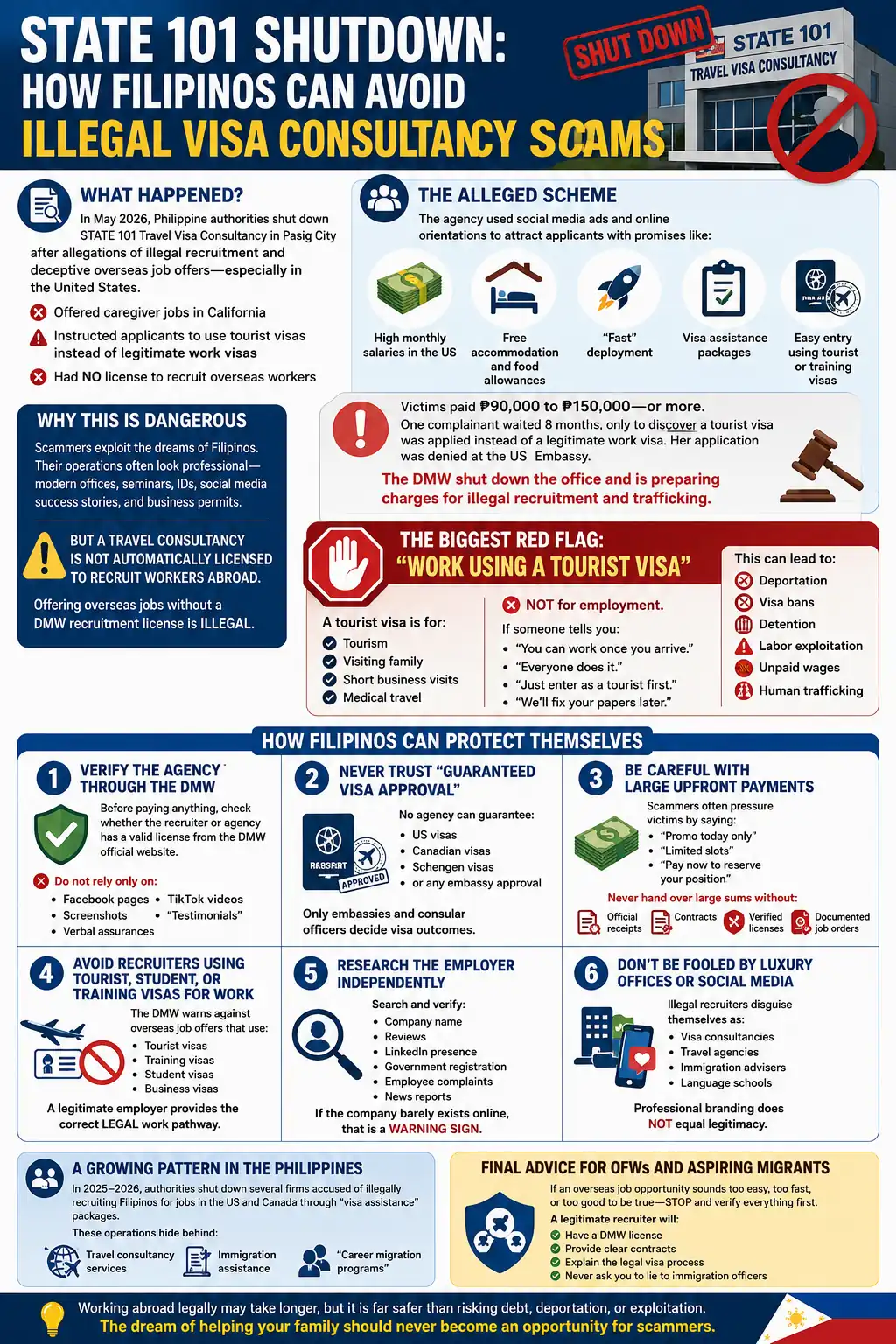
In May 2026, Philippine authorities shut down STATE 101 Travel Visa Consultancy in Pasig City after allegations of illegal recruitment and deceptive overseas job offers surfaced online and through victim complaints. The case became another warning sign for Filipinos dreaming of working abroad — especially in the United States.

 Copy link


According to the Department of Migrant Workers (DMW), the company allegedly offered caregiver jobs in California while instructing applicants to use tourist visas instead of legitimate work visas. Authorities said the consultancy had no license to recruit overseas workers.
What Was the Alleged Scheme?
Investigators said the agency used social media ads and online orientations to attract applicants with promises such as:
- High monthly salaries in the US
- Free accommodation and food allowances
- “Fast” deployment
- Visa assistance packages
- Easy entry using tourist or training visas
Victims reportedly paid processing fees ranging from ₱90,000 to ₱150,000, while some cases involved much larger amounts.
One complainant told authorities she waited eight months, only to discover that the consultancy had applied for a regular tourist visa instead of a legitimate work-related visa. Her application was denied at the US Embassy.
The DMW later shut down the office and began preparing possible charges related to illegal recruitment and trafficking.
Why This Is Dangerous
Many Filipinos are vulnerable to these scams because overseas work opportunities can change lives financially. Scammers know this.
The most dangerous part of schemes like this is that they often look professional:
- modern offices,
- organized seminars,
- social media “success stories,”
- uniforms and IDs,
- legal business permits.
But a travel consultancy is not automatically licensed to recruit workers abroad.
The DMW emphasized that offering overseas jobs without a DMW recruitment license is illegal.
The Biggest Red Flag: “Work Using a Tourist Visa”
This is one of the clearest warning signs.
A tourist visa is for:
- tourism,
- visiting family,
- short business visits,
- medical travel.
It is not intended for employment.
If someone tells you:
- “You can work once you arrive,”
- “Everyone does it,”
- “Just enter as a tourist first,”
- “We’ll fix your papers later,”
you should immediately be suspicious.
Working illegally abroad can lead to:
- deportation,
- visa bans,
- detention,
- labor exploitation,
- unpaid wages,
- human trafficking situations.
How Filipinos Can Protect Themselves
1. Verify the Agency Through the DMW
Before paying anything, check whether the recruiter or agency has a valid license from the DMW official website.
Do not rely only on:
- Facebook pages,
- TikTok videos,
- screenshots,
- “testimonials,”
- or verbal assurances.
2. Never Trust “Guaranteed Visa Approval”
No agency can guarantee:
- US visas,
- Canadian visas,
- Schengen visas,
- or any embassy approval.
Only embassies and consular officers decide visa outcomes.
3. Be Careful With Large Upfront Payments
Scammers often pressure victims by saying:
- “Promo today only,”
- “Limited slots,”
- “Pay now to reserve your position.”
Never hand over large sums without:
- official receipts,
- contracts,
- verified licenses,
- and documented job orders.
4. Avoid Recruiters Using Tourist, Student, or Training Visas for Work
The DMW specifically warned Filipinos against overseas job offers that use:
- tourist visas,
- training visas,
- student visas,
- business visas
for actual employment.
A legitimate overseas employer should provide the correct legal work pathway.
5. Research the Employer Independently
Search:
- the company name,
- reviews,
- LinkedIn presence,
- government registration,
- employee complaints,
- and news reports.
If the company barely exists online, that is a warning sign.
6. Don’t Be Fooled by Luxury Offices or Social Media
Authorities said many illegal recruiters disguise themselves as:
- visa consultancies,
- travel agencies,
- immigration advisers,
- language schools.
Professional branding does not equal legitimacy.
A Growing Pattern in the Philippines
The STATE 101 case is not isolated.
In 2025 and 2026, Philippine authorities also shut down other firms accused of illegally recruiting Filipinos for jobs in the US and Canada through “visa assistance” packages.
According to officials, many of these operations hide behind:
- travel consultancy services,
- immigration assistance,
- or “career migration programs.” Final Advice for OFWs and Aspiring Migrants
If an overseas job opportunity sounds too easy, too fast, or too good to be true, stop and verify everything first.
A legitimate recruiter will:
- have a DMW license,
- provide clear contracts,
- explain the legal visa process,
- and never ask you to lie to immigration officers.
Working abroad legally may take longer, but it is far safer than risking debt, deportation, or exploitation.
The dream of helping your family should never become an opportunity for scammers.
 To ensure your balikbayan boxes reach home without a hitch, it is essential to understand the Bureau of Customs' strict rules on tax-free privileges and learn how to avoid the costly mistake of mixing personal gifts with commercial goods.