

The City of Manila prepares for a grand commemoration as Araw ng Maynila takes center stage on Wednesday, June 24, 2026. The local government announced that classes, local public offices and some business operations would be suspended on the said date, as it is observed as an official regional public non-working holiday within the National Capital Region. The suspension would allow residents of the region to participate in a series of vibrant events, food fairs and civic programs.
 Copy link


Four hundred fifty-five years of history and resilience
Established by Spanish conquistador Miguel López de Legazpi in 1571, Manila stands as the historical, political and cultural heart of the Philippines. For four hundred fifty-five years, spanning the period of 1571 to 2026, the city served as a critical hub of global trade between Asia and Europe. The metropolis has weathered the Spanish period, American rule, Japanese occupation, severe destruction during the Second World War and extensive post-war rebuilding.
Today, historical heritages from Intramuros, Rizal Park and Binondo—the oldest Chinatown in the world—continue to define the identity of the city. Notable sites, e.g., Fort Santiago and the Manila Cathedral, remain central to the ongoing tourism revival efforts of the local administration.
Festivities and civic duties
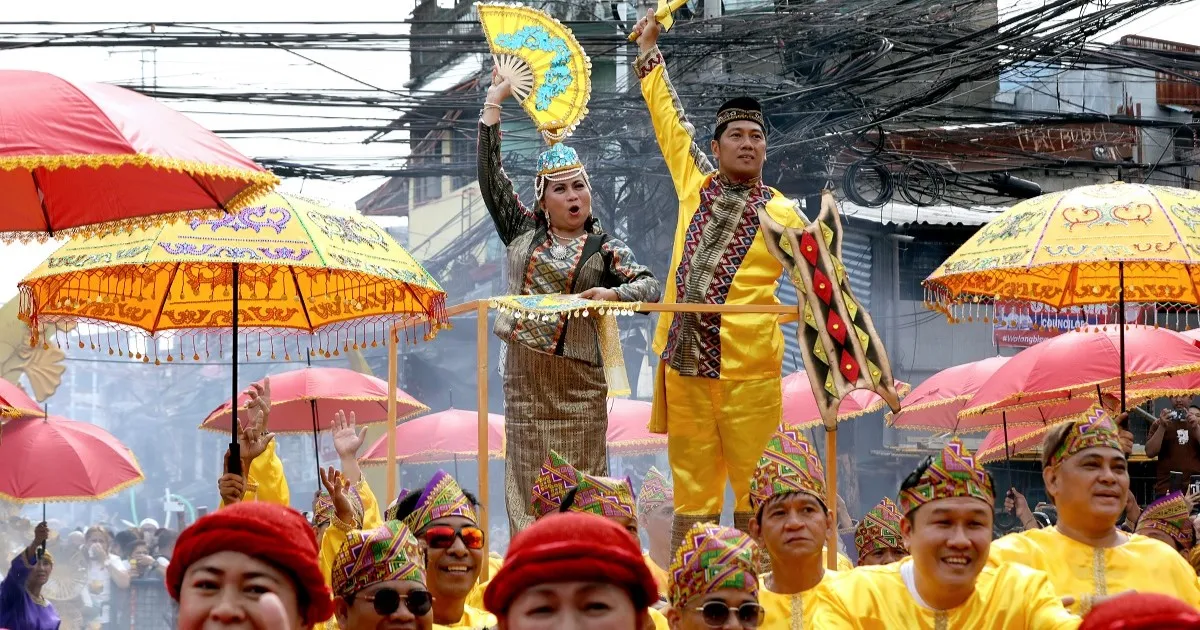
Traditional celebrations are being organized to honor the rich colonial history of the capital. Floats, street dancers and bands traversing key city routes are expected to draw immense crowds. Furthermore, local trade markets showcasing Manileño cuisine, crafts and goods would be opened to the public.
However, if these large-scale gatherings are not properly managed by the City Government of Manila, the resulting congestion could result to severe traffic bottlenecks along major thoroughfares. Local authorities stated that extra traffic enforcers would be deployed to help motorists cope up with the anticipated road closures.
Intense urbanistic discussions regarding modern infrastructures, perennial flooding and heritage preservation are being raised by civil society groups in light of the anniversary. If the city is to remain a viable modern megacity, the local government must take responsibility for balancing commercial expansion with the protection of its historical soul. Significant investments are being channeled into restoring old businesses and family-owned properties in Binondo so that the contrasting imageries of modern business centers and centuries-old colonial walls can be seamlessly integrated.
During the festivities, awards honoring the historical achievements and outstanding citizens of the city would also be distributed, reminding Manileños that the soul of the capital lies as much in its people as in its foundational stones.
Honoring the legacy of the late Jesse Robredo, Naga City has officially launched its bid for Highly Urbanized City status, leveraging a decade of consistent economic growth and institutional readiness to secure greater autonomy and national revenue.