


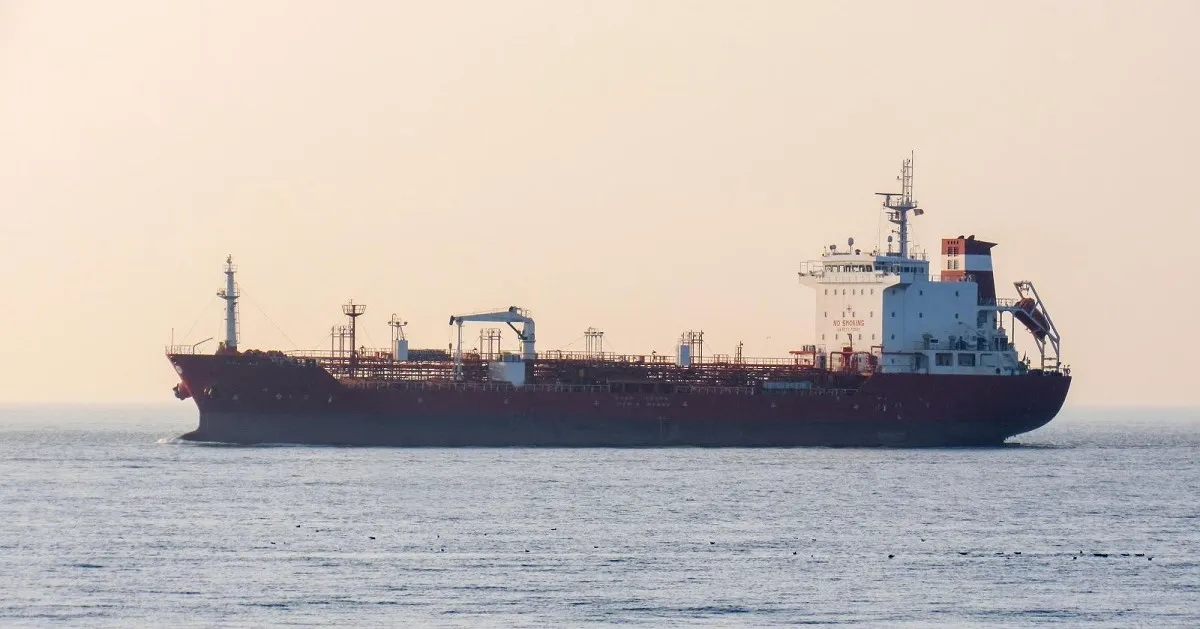
Global oil prices plummeted below 80usd/bbl on Tuesday on optimism over the promised reopening of the Strait of Hormuz, a development that would ease inflation pressures on global economies currently struggling to cope up with rising costs.
 Copy link


The slide accelerated to more than five percent after reports were made that Washington could ease sanctions on Iranian crude as part of the agreement to end the Middle East war, allowing Tehran to immediately sell crude and refined oil products.
In Manila, the Department of Foreign Affairs welcomed on Wednesday the peace pact reached between the United States and Iran, as the Philippine government expressed hope that the geopolitical breakthrough would finally result to a permanent cessation of hostilities in the region.
The department commended the constructive role played by Pakistan, Qatar, Egypt, Saudi Arabia, Turkiye and other partners in advancing dialogue. If the peace agreement holds, the agency noted that the global economy could recover from the conflict that has exacted a heavy humanitarian toll, including the loss of lives, damage to civilian infrastructures and disruptions to international trade.
International benchmark Brent North Sea crude ended at 78.96usd/bbl, while the main US oil contract, West Texas Intermediate, dropped to 76.05usd/bbl.
Oil industry experts cautioned that the restoration of normal operations would take time after the vital waterway was shut down. However, the situation is viewed by analysts as much improved compared with the worst-case scenario of continued fighting, e.g., prolonged maritime blockades, with no timeframe on reopening. Three oil tankers and two cargo ships had already passed through the strait, Iranian media reported.
Tehran blockaded the strait after the United States and Israel launched strikes against Iran on Feb. 28. Consequently, shipping to and from Iranian ports was halted by Washington.
Meanwhile, Wall Street stocks had a mixed day, with the Dow rising to a second consecutive record close, while the S&P 500 and Nasdaq retreated. Analysts noted that a mass exodus out of the market was not seen, describing the dynamics as a rotation consistent with a bull market.
Although the deal has not been formally signed, it was stated by trading experts that a peace dividend is already appearing for markets. European markets closed higher, playing catch-up with the US, as some indices remain below their pre-war levels.
This week’s focus during the Monday to Friday trading period is also placed on a wave of central bank decisions. US Federal Reserve Chair Kevin Warsh kicked off his first meeting in charge of the rate-setting committee on Tuesday, where policymakers are largely expected to keep rates steady as the war fallout ripples through the world’s largest economy. The Bank of England is also expected to stand pat.
In Asia, markets ended mixed. The yen was little changed after the Bank of Japan raised interest rates on Tuesday to their highest level since 1995.
In the corporate space, Elon Musk’s SpaceX turned in another positive performance, ending up around five percent after earlier soaring more than seventeen percent. The rally has lifted SpaceX above Amazon to the fifth largest company in the world by market value.